Superheroes can expect to not only contest with a villains henchmen, but with treacherous traps and hidious hazards too. With the current rules we have no way of simulating the Fantastic Four exploring Rama-Tut’s trap filled sphinx or avoiding the negative zone’s black hole sun.
So let’s make some hazards!

We will be talking about two different types of hazards, traps and dangers. A trap is a type of hazard that we use in place of a combat encounter all on its own. An example of a trap is a hallway that Kraven the Hunter has fitted with sleeping gas to knock out spiderman when he tries entering his lair. A danger is something present within a combat encounter which either makes it harder or threatens all characters. An example of a danger is a pair of enchanted lightning rods that Loki has created to catch Thor’s electrical attacks and transforms the electricity into an arcing current which damages anyone that walks between them.
Creating a Trap
A trap needs to be able to threaten a team of heroes on its own. This, however, does not mean that traps have to be complex and they can be created in two simple steps. Create a concept and decide on a rank.
Concept: A concept can be as wacky, magical, or grounded as you want. It could be an enchanted rope left by Baron Mordo that tries to hang the heroes as they walk past or a landmine placed inside a building by the The Punisher. Trap concepts usually need to have two things though, a trigger and a bypass. The trigger for the ropes is the heroes coming too close and the landmines trigger is someone stepping on it. A bypass is either the method that the villain uses to pass the trap unharmed or a method of disarming it. Either way a bypass can usually be done by performing a relevant check, such as using logic to come up with a countercharm for the ropes or agility to disarm the landmine.
Additionally, you can decide that simply damaging the trap is a method of disarming it. Most traps will have 60hp and no focus, though magical traps or particularly strong ones may be different. Whatever your concept it should be both interesting and easy for the players to imagine.
Rank: Traps can be given a rank just like a regular character, but rather than having a full sheet it only has one aspect. Attack or TN and Effect. If you decide that your trap will attack the heroes simply calculating that using the same methods for hitting and damage you would for a normal character using the numbers presented in the table below. If you want to give the trap a specific type of damage, give it that damage type, such as ice for a freeze ray. Alternatively, you can set a Target Number for the trap and pick from the list of powers to determine what effect happens on a failure.
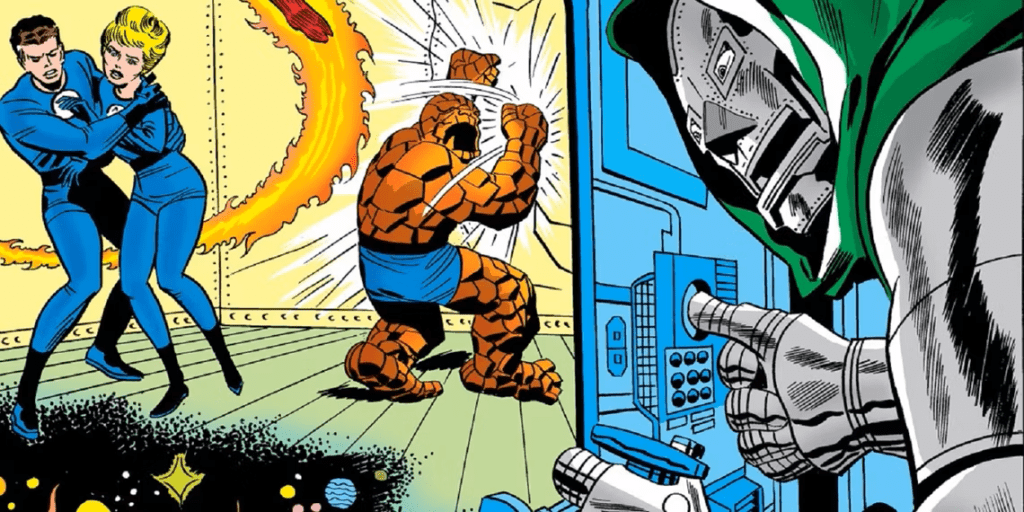
For example, Dr Doom installs a trap in castle corridor which releases unstable pym particals into a room resizing everyone in the area as the shrink 2 power and they cannot willingly change back to their normal size unless they already have the grow power.
Use the table below to help determine an adequate Attack Modifier or TN. A trap is likely to be as damaging as a single character of matching rank.
| Rank | Attack and Damage Modifier | Target Number |
| 1 | +2 | 12 |
| 2 | +5 | 13 |
| 3 | +8 | 14 |
| 4 | +12 | 15 |
| 5 | +16 | 16 |
| 6 | +21 | 17 |
Examples.
Using these methods we’ll create two different versions of a rank 3 freeze ray.
The attacking freeze ray would attack agility defense, have a +8 modifier and will deal ice damage, meaning it paralyses its target on a fantastic success. For example, when it attacks Ant-Man it rolls a d616+8 against Ant-Man’s agility defense of 14. On a success it deals a (dMx3)+8 ice damage, or double that plus paralysing Ant-Man on a fantastic success.
Alternatively, the TN freeze ray would have a TN of 14 and, on a failure, replecates the effects of the elemental burst power. This means it deals a (dMx3)+8 damage ice damage, or double that plus paralysing Ant-Man on a fantastic success.
Creating a Danger
Unlike traps, dangers should be more passive, though that does not mean they actively change. A well made danger should change the landscape of a combat and offer both heroes and villains interesting tactical options. Examples of easy to implement dangers are the constant traffic of a busy road or a flow of lava running through the battlefield. For dangers like this, simply deal a dMx characters rank whenever they are exposed to it. For example, when Hulk pushes Abomination into traffic the villain would take a (dMx5) damage because Abomination is rank 5.
However, more complex dangers can present themselves. Simply damaging a character doesn’t get across the threat of falling into the negative zones sun. In extreme cases like these you may need to create a three step process of the danger getting worse the longer a character is exposed to it. So if Mr Fantastic is pushed off of a rock while fighting Annihilus he is allowed an agility check (using the same TN used for the traps above) each round for three rounds to stabalise himself and catch on some debris before dying. Alternatively, he could gain the prone and then paralysed conditions for each round he fails his check if you do not want the danger to be deadly.

Using these tools you can quickly create hazards for your heroes both on the fly and during your preparation. Let me know about your best ideas and how you’d implement them into your game.
 Roleplaying Writer
Leave a comment