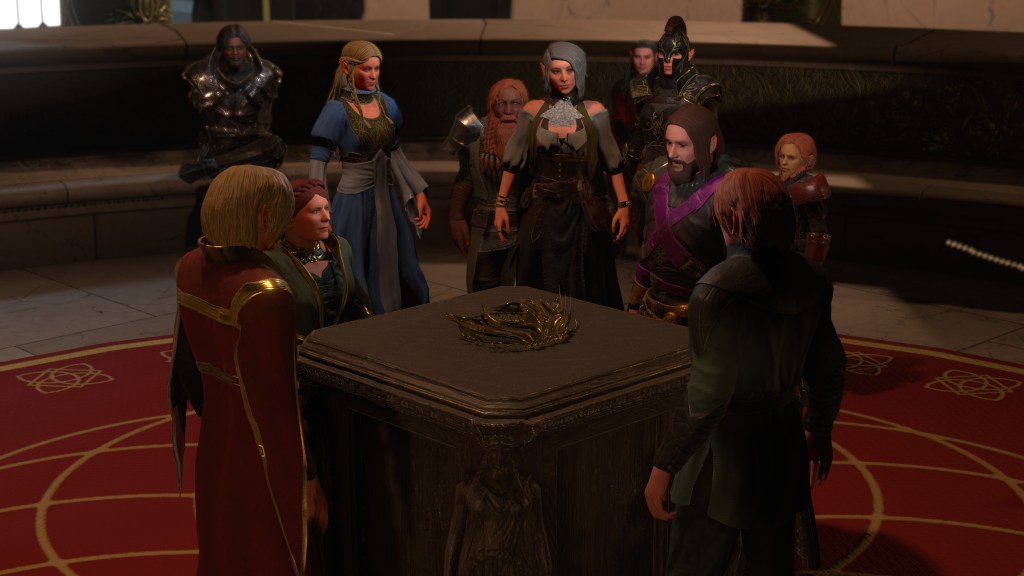
According to steam I just hit my 120th hour of playing Solasta: Crown of the Magister. The game is a pretty direct conversion of Dungeons and Dragons 5th edition into video game format with minor tweaks. If that’s all it is why have I gotten so many hours into it? Simply put. It understands what you need to do to spice up a 5e encounter. And it does this in only 3 ways. Elevation, lighting, and crafting.
Firstly elevation matters. It can be very difficult, for those of us that can’t afford those $500 3d terrain kits, to simulate different elevations in our games. This can be doubly true for online games where sticking a bottlecap under your wizard to show he’s flying isn’t an option. This has sadly led to a flattening of environment. Goblins don’t build towers, trees are just forest themed walls, and stairs may as well be bridges between to areas.
Luckily, Solasta doesn’t have this restraint so it can show us how much flavour can be added to a simple encounter by its inclusion. Lets use the games very first combat encounter as an example. The party is walking up a mountainous path to their destination when they reach a switch back. Guarding this area are five goblins. Since its likely broad daylight when the party arrives sneaking up to the goblins is difficult. So combat likely begins with players at the bottom of the path and the goblins spread out between the turn in the switchback and the area directly above where the PCs are starting.
This encounter is thus both simple and effective. Player are left with some cover to avoid getting attacked from above, but that stops them from retaliating. They can charge forward to get to high ground but it will take 2 rounds of dashing plus provoking as they run past all of the lower guards to reach the archers. Or, if they’re strong enough, they can spend a turn climbing the wall. Its a lot of options all while rewarding players if they use their characters strengths or punishing players if they’re stupid.
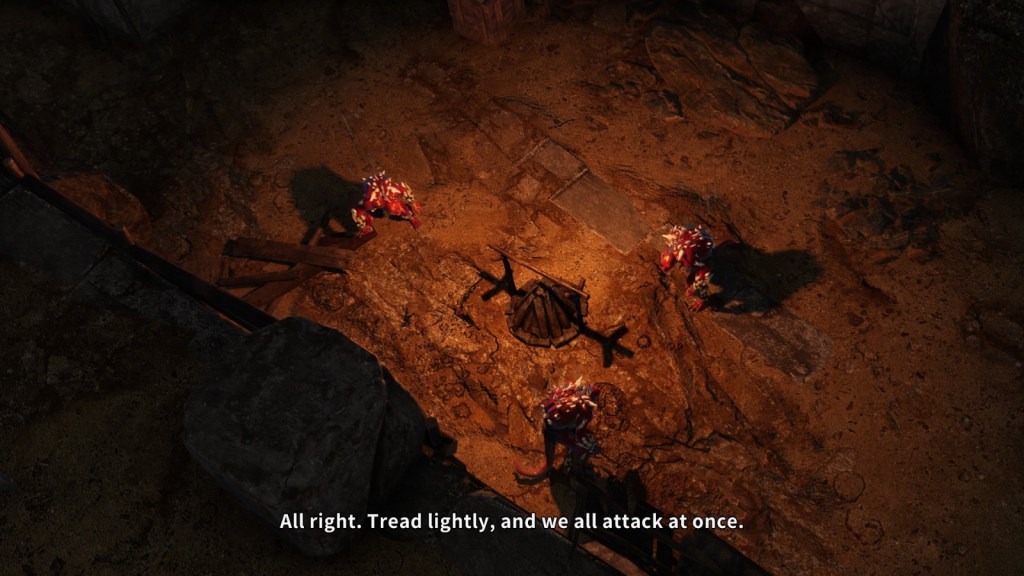
Second is lighting. It seems silly to say for old school players but lighting is one of the MOST important aspects of combat. In 5e though fighting someone in the dark without darkvision imposes disadvantage on all attacks, and Solasta makes sure it reminds you of this. Dungeons are dark places and most creatures in them will have darkvision which means they have a huge advantage in the dark against those without. But even if your characters all have darkvision the stories main adversaries, the Sorak, gain regeneration while in darkness. This means that light, whether its through spell or torch, remains just as important as your ever dwindling rations.
The tabletop games for which I’ve been a player, darkness has only ever come up when it was magical in nature. Don’t let that happen! Darkness is both a great thematic and mechanical tool. Using the Soraks as an example, they are duplicitous schemers that have been hiding in the shadows for centuries and are trying to turn the nations against one another. You’re PCs both literally and figuratively shining a light on them weakens them. Give your dungeon dwelling denizens light sensitivity or abilities that only work in shadows and watch as your players change how they approach each encounter.
Lastly is crafting. D&D 5e has a big problem with loot. DMs have to either stat out prices for every item they give out or tool the loot they do give into something the PC would keep for the rest of their career. That’s a lot of work, so how about we make the players do it for us. Solasta gives out manuals of item crafting fairly regularly which allow you to craft specific weapons or armour. But these each require at least two pieces. A ‘primed’ version of the item they wish to create and a reagent. Example. To create Whiteburn, a shortsword with +1 to-hit and deals an extra 1d6 acid damage, the PCs must first find a primed shortsword as a base and ‘blood of solasta’ as a reagent, then spend 36 hours crafting it.
I like this method since it not only puts the onus on the players for deciding what magic items they get but it also allows the DM to control what equipment they can get without it seeming artifical. Players want +3 fullplate? Darn, they just can’t find any primed fullplate anywhere. Players want a Flametongue? Well that requires stones from the gullet of a Remorhaz so they’ll have to plan out how they’re going to hunt down and kill a CR 11 creature.
Solata, while not a masterpiece by any stretch of the imagination, does offer us a reminder of these small tactical and quality of life aspects we often forget about in our games. So lets make sure we use what we have.
 Roleplaying Writer
Leave a comment