I can count on one hand the number of times I’ve played a written, fantasy adventure and come to the final battle against the villain understanding who I was fighting.
The Awakening (AD&D, 1994), Curse of the Crimson Throne (D&D 3.5/Pathfinder, 2008), and Curse of Strahd (D&D 5e, 2016)
I remember each of these villains far better than even those I’ve created myself. But why is that? Well, lets see how each of them are introduced.

The Awakening is by FAR the shortest of these adventures coming in at only 64 pages. In it, the PCs start by ‘awakening’ inside of coffins after having strange dreams of being hunted by cats. The owner of the store they wake up in is surprised, but has seen stranger things. He then receives some strange artifacts which contain a mummified cat which comes alive. After fighting the cat, BAM in walks the spirit of Sachmet. A mummified cleric of Bastet, the goddess of protection, cats, and pleasure. You fight Sachmet EIGHT times over the course of this adventure, watching her grow more powerful with every battle. And, since you are fighting the manifestation of her personality you get to understand who she is as a character pretty quickly. She is petty, lonely, and gets pleasure from watching others suffer.
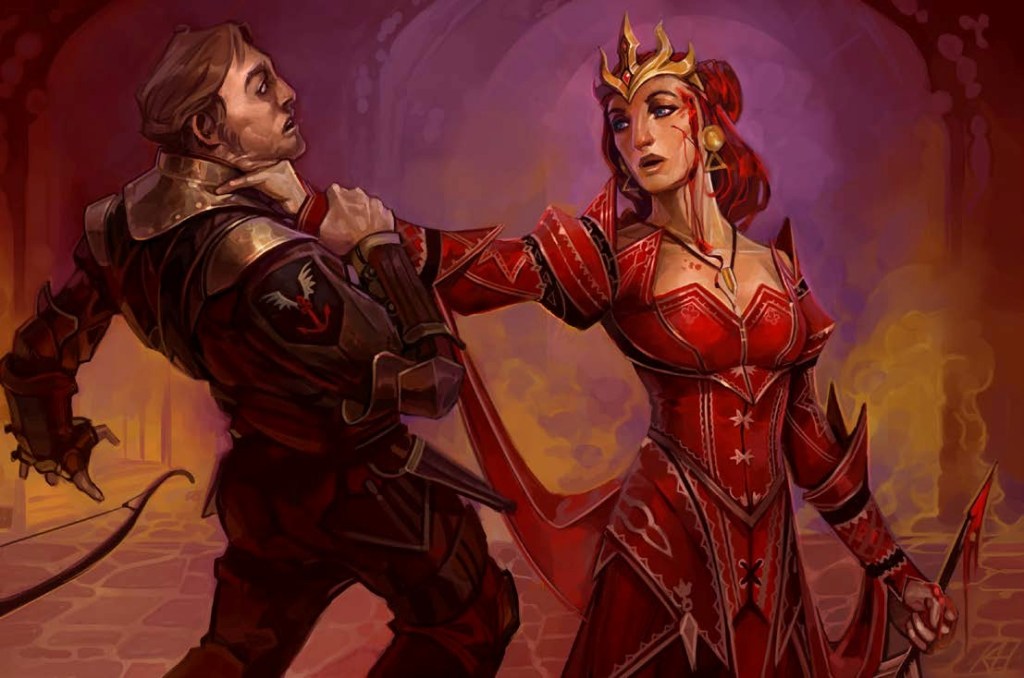
Curse of the Crimson Throne is by far the longest of these adventures, told over 6 books with a total of 576 pages, plus two additional books of background information and information for players. Despite all this the PCs are aware of Queen Ileosa Arabasti straight away. In the first 50 pages you have gone to two of her proclamations, suspect she has killed the king to get his crown, stopped the execution of the man/woman she’s framed, and have seen her unfazed when she was shot through the head by an assassin.
Then there is Curse of Strahd, without a doubt the most well known of these it comes in at a cool 256 pages. While the vampiric lord of Barovia, Count Strahd von Zarovich himself doesn’t NECESSARILY appear until you fight him in his home, there are many different ways of interacting with him beforehand. But even if you never talk to him, everything happening in Barovia comes back to the count.

So can we learn from these three introductions?
Firstly, you meet each of these villains before the end of the first act. Sachmet is the second thing players see, in 20 pages your looking for the person Ileosa is trying to frame for her husbands murder, and you should have dinner with Strahd before you’ve started looking for the artifacts of Ravenloft.
Let your players know who they’re up against early.
Secondly, the villains are highly motivated and have obvious, understandable goals, and it is clear why them being successful would be a bad thing. While we might not understand the nuisances of this straight away, we understand their motivations from their introduction. Sachmet wants to be freed from her tomb, Ileosa is a sociopath and a narcissist who thinks she deserves power, Strahd wants Ireena Kolyana to be his bride.
Hiding your villain’s wants only makes them less interesting. So take a page from Disney and give every villain their own ‘song’.
Finally, they all have set pieces introductions long before you can really fight them. Sachmet is a mummy walking through the streets of an English town, Ileosa is crying at her husbands death and announcing who she suspects murdered him to a crowd of angry commoners, Strahd breaks into a church looking for his future bride Ireena Kolyana.
Give something for your players to talk about when someone comes late to the table. An iconic moment makes for a memorable villain. “Dude, we just saw the queen get shot in the head with an arrow then pull it out and stab it into the guy who shot her.”
“That’s all well and good, but those are long adventures. I’ve only got 5,000 words.”
Fear not, for we can apply these lessons even to short adventures. To prove it I’ll use The Haunting of Hinojai (2012), a Pathfinder Society Adventure, as an example. In this 7,000 word adventure the players are exploring Hinojai, a Japanese themed haunted house. The interesting thing about this adventure though is that the you meet the villain long before they ever go to the house.
Using an alias, Minasako is walking around town as you arrive. She will be interested in newcomers and talk to you. Many of the locals fear the house and warn you that a vampire lives there, but she is the only one that can give you hints at the houses actual history. As an extra precaution to ensure you meet her, she is also the owner of the local inn and the house is unapproachable until night.
Now, in only 300 words, we have met our villain (Minasako) AND learned what she is doing (eating the locals).
The rest of the adventure, until your final confrontation with Minasako, is learning about the houses dark history. As you explore Hinojai, haunts (Pathfinder’s ghostly traps) will reveal this story through their effects.
“Minasako’s lover leapt from the balcony to their death and now their spirit is forcing you to do the same.”
This means that every monster and trap in this dungeon is tied into the villains story. You learn about them through the gameplay and not just by finding a random journal.
Finally, you confront Minasako. She is bathing in a vat of vinegar and pulls her own head off as you enter, dragging out the organs and letting them flop to the floor below. This entire scene is all told in only 200 words.
How can that image not stick with players?
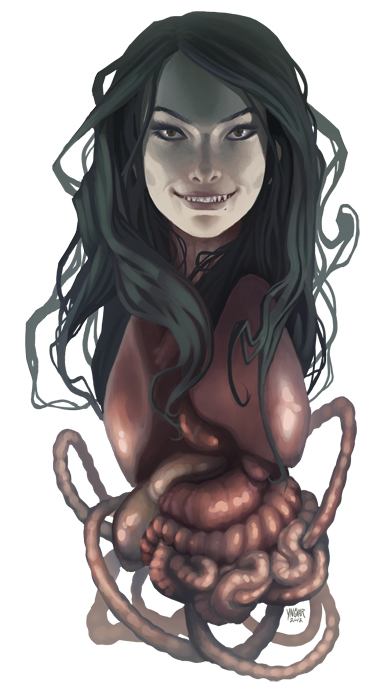
I’m honestly disappointed that every edition of D&D has them EXCEPT for 5e!
So when writing a memorable villain’s introduction,
1. Meet the heroes before they fight.
2. Make their goals and motivations clear to the players.
3. Have a moment worth remembering.
 Roleplaying Writer
Leave a comment